Melanie Griffith
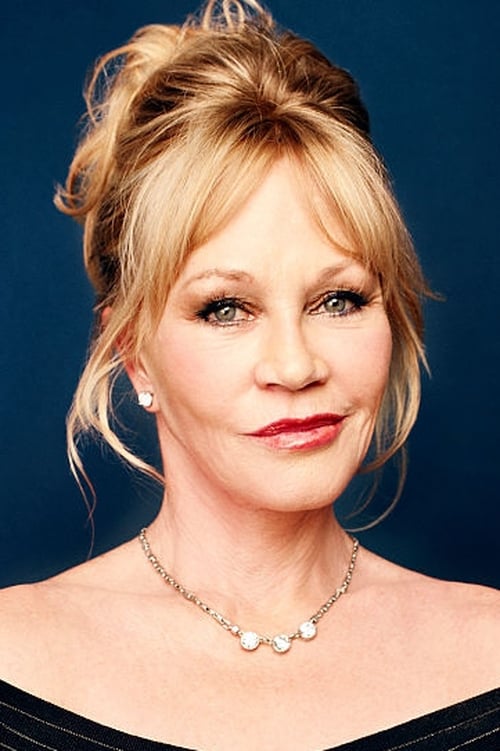
Acting
Melanie Richards Griffith (born August 9, 1957) is an American actress. She began her career in the 1970s, appearing in several independent thriller films before achieving mainstream success in the mid-1980s.
About Melanie
Melanie Richards Griffith was born on 9 August 1957 in Manhattan, New York City, the daughter of Tippi Hedren — Alfred Hitchcock's star in The Birds (1963) and Marnie (1964) — and Peter Griffith, an advertising executive and former child actor. Hollywood royalty is a cliché; Griffith's childhood was the real thing, and the strange thing. She appeared in a television commercial at nine months old. She grew up shuttling between New York and Los Angeles, enrolled at the Hollywood Professional School, and was acting professionally before she could drive — a childhood spent on sets, in trailers, and in the long shadow of a famous mother.
Her first significant film role came at seventeen, opposite Gene Hackman in Arthur Penn's neo-noir Night Moves (1975), a part that included nude scenes and announced — for better and worse — that the industry saw her as an adult before she was one. Small roles followed through the late 1970s: The Harrad Experiment, Smile, The Drowning Pool, Abel Ferrara's The Driller Killer. In 1976, at eighteen, she married Don Johnson — the first of what would become one of Hollywood's most chronicled romantic sagas; the marriage lasted six months. The late seventies were also the years her struggles with drugs and alcohol began, struggles she would later discuss with disarming frankness.
The comeback started at twenty-six. Brian De Palma cast her as Holly Body, the adult-film actress at the center of the mystery in Body Double (1984), and Griffith tore into the role with a comic-erotic ferocity that earned her the National Society of Film Critics Award for Best Supporting Actress. It was the performance that proved she was more than a famous surname — she was funny, fearless, and entirely her own creation. Jonathan Demme's Something Wild (1986) confirmed it: as Lulu, the wild-child who upends Jeff Daniels' straight life, she was the live wire the whole film ran on, and critics took notice.
Then came the role that defined her. In Mike Nichols' Working Girl (1988), Griffith played Tess McGill, the Staten Island secretary with a head for business and a boss — Sigourney Weaver's Katharine Parker — who steals her ideas. Griffith played Tess not as a caricature of ambition but as its beating heart: smart, underestimated, and unwilling to stay in her lane. The performance earned her the Academy Award nomination for Best Actress and won her the Golden Globe for Best Actress in a Comedy or Musical. The film was a cultural event — the "let the river run" anthem, the shoulder pads, the fantasy that merit could beat pedigree — and Griffith was its face. For a moment, the daughter of Hollywood royalty became the movies' great emblem of the outsider crashing the gates.
The 1990s were prolific and uneven, as the decade is for most stars. She reunited with De Palma for The Bonfire of the Vanities (1990), played a wronged wife in Pacific Heights (1990), and starred opposite her by-then-remarried husband Don Johnson — they wed again in 1989 and had daughter Dakota Johnson that same year — in Paradise (1991). There were Sidney Lumet's A Stranger Among Us (1992), Ron Howard's The Paper (1994), Milk Money (1994), the beloved ensemble drama Now and Then (1995), and Adrian Lyne's Lolita (1997) as Charlotte Haze. Her personal life stayed in the headlines: the marriage to Johnson ended in 1996, the same year she married Antonio Banderas, whom she had met on the set of Two Much (1995). With Banderas she had daughter Stella del Carmen Banderas Griffith, and the marriage — nearly two decades — became one of Hollywood's most enduring, ending in divorce in 2015.
Through it all, Griffith kept working on her own terms: Woody Allen's Celebrity (1998), Crazy in Alabama (1999) — directed by Banderas, with Griffith playing a woman who decapitates her abusive husband — the voice of Margalo in Stuart Little 2 (2002), a well-reviewed Broadway debut replacing in the musical Chicago in 2003, John Waters' Cecil B. Demented (2000), and later-career turns in Automata (2014) opposite Banderas and a recurring role on television's Hawaii Five-0. She has been candid about her multiple stints in rehab, her epilepsy diagnosis, and the plastic surgery she has publicly regretted — a candor that, in an industry built on image management, has always been her most distinctive feature.
Her children with Steven Bauer — son Alexander Bauer, from her 1981–1989 marriage to the Scarface actor — and with Johnson and Banderas extended the dynasty: Dakota Johnson became a star in her own right with the Fifty Shades films and a run of acclaimed independent work, making the Hedren-Griffith-Johnson line three generations of actresses deep, alongside the Barrymores and the Fondas in Hollywood's family pantheon. Griffith's own mother, Tippi Hedren, remained a fierce presence in her life well into her nineties.
Melanie Griffith's career resists easy summary, which is precisely the point. She was a child of the industry who survived it — the addiction, the tabloids, the typecasting, the famous marriages — and kept showing up, funny and game and unwilling to be embarrassed. The Working Girl Oscar nomination sits in the record books, but her real achievement is stranger and more durable: she turned a life that could have been a cautionary tale into a five-decade career, on her own face, in her own voice. Tess McGill would have understood.
The Previously take
Our read on Melanie Griffith.
Hollywood royalty who earned the crown herself. The daughter of Tippi Hedren, Melanie Griffith started as a teen model and worked her way through 70s indies before Brian De Palma's Body Double (1984) and Jonathan Demme's Something Wild (1986) revealed a performer of real voltage — funny, sexy, and smarter than the material sometimes deserved.
Then came Working Girl (1988). As Tess McGill, the Staten Island secretary with a head for business and a heart for the hustle, Griffith earned an Oscar nomination and gave the 1980s its definitive working woman. 'I have a head for business and a bod for sin' — nobody else could have sold both halves.
The personal life made headlines; the work made the case. Griffith's run through the late 80s and 90s — Milk Money, Nobody's Fool, Crazy in Alabama (directed by then-husband Antonio Banderas) — showed an actress who never stopped swinging. And the dynasty continues: daughter Dakota Johnson, carrying the family business into a new century.
Career highlights
The moments that made Melanie.
- Body Double (1984) — Holly Body. De Palma's voyeuristic thriller; the arrival.
- Something Wild (1986) — Audrey. Demme's wild ride; Golden Globe nomination.
- Working Girl (1988) — Tess McGill. Oscar nomination; the definitive 80s working woman.
- Roar (1981) — Dolly. The madcap comedy with her mother, Tippi Hedren.
Keep exploring
More people worth your time.
On screen
Selected career credits — verified via TMDB.
The Simpsons
Melanie Griffith (voice)
Hawaii Five-0
Clara Williams
The Tonight Show with Jay Leno
Acting
Nip/Tuck
Brandie Henry
Miami Vice
Christine von Marburg
Hot in Cleveland
Melanie Griffith
Starsky & Hutch
Julie
Raising Hope
Tamara Collins
Vega$
Acting
Lolita
Charlotte Haze
The Hardy Boys / Nancy Drew Mysteries
Acting
Twins
Lee Arnold
The High Note
Tess
The Disaster Artist
Jean Shelton
Follow Melanie
Official pages around the internet.