The Witcher 3
The bar every RPG is measured against.
The Story
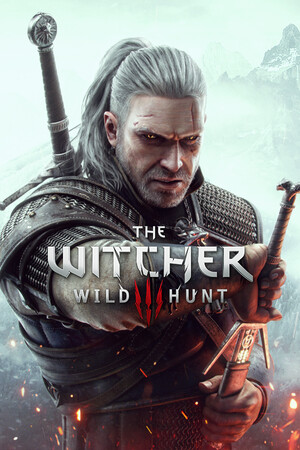
What it’s aboutYou are Geralt of Rivia, mercenary monster-hunter, searching for Ciri — the child of prophecy — across a war-torn Northern Kingdoms as the Wild Hunt rides. CD Projekt Red's 2015 open-world epic set the bar every RPG since has been measured against.
Two expansions — Hearts of Stone and Blood and Wine — are widely considered the best DLC ever made, and the 2022 next-gen update keeps the definitive version current on modern hardware.
Read the full story
The combat first, because KB doesn't flinch: it's the weak link, and it's not close. Geralt moves like he's on ice — floaty footwork, animation-locked swings, a dodge-roll that solves too many problems and a lock-on that creates new ones. The signs (magic) and oils and potions add texture, but the swordplay underneath is serviceable at best, and the 2022 next-gen update — prettier, faster loading, new camera — didn't fix the feel. Input response is the thing I can't forgive easily, and Witcher 3 asks for forgiveness here constantly. If combat feel were the whole grade, this wouldn't be on the list.
But quests are systems too, and nobody has built better ones. The Bloody Baron is the famous example for a reason: a contract that becomes a tragedy that becomes a choice with no clean answer, and the consequences surface chapters later in ways the game never telegraphs. Notice boards aren't fetch-quest dispensers — contracts are monster-hunting loops with investigation phases: examine the tracks, identify the beast, brew the right oil, drink the right potion. The prep IS the gameplay, and it's the fantasy the combat can't deliver: Geralt as professional, not superhero. Hearts of Stone's wedding heist and Blood and Wine's Toussaint — a whole second map as DLC — remain the gold standard for expansions that respect your time and money.
Then there's Gwent, the mini-game that ate the main game for half the player base. A complete, balanced card game — deck-building, three rounds, bluffing with passes — good enough to spin off into its own standalone. KB's design read: Gwent works because it's a game of incomplete information inside a game of complete power fantasy. Geralt can kill anything; at the Gwent table he's just a guy with cards. That contrast is doing narrative work the cutscenes can't.
The world density is the last pillar. Novigrad's vertical sprawl, the swamps of Velen, Skellige's cliffs — every question mark on the map earned its place, and the writing treats peasants like people instead of quest furniture. A decade on, with the next-gen update and a mod scene still going, it remains the bar: the RPG every RPG gets measured against, combat and all. Which tells you something about what players actually value — and it's not the swordplay. It's the feeling that the world was written by people who gave a damn.
The launch is worth remembering because it was supposed to be impossible. Three and a half years of development at CD Projekt Red on the studio's REDengine 3, two public delays, and a final release on May 19, 2015 that still shipped with bugs and a day-one patch the size of a small game — and it sold over 4 million copies in its first two weeks anyway. Then it did the thing almost no game does: it got better. Two expansions, Hearts of Stone and Blood and Wine, landed within a year, and Blood and Wine alone — a 30-hour farewell tour through the sunlit vineyards of Toussaint — was winning RPG-of-the-year awards on its own. The full game collected more than 250 Game of the Year awards, the most any game had ever received. The apology tour that followed the buggy launch became the industry's favorite redemption template: patch it, support it, expand it, earn it.
The Netflix effect is the business story nobody saw coming. When the Henry Cavill series premiered in December 2019, it didn't just sell books by Andrzej Sapkowski — it sold the game again, four and a half years after launch, pushing The Witcher 3 back up the Steam charts past its launch-week peak. That's the thing the industry keeps relearning: a great game with a great world is an annuity. The source material helps: Sapkowski's short stories and novels gave CD Projekt Red a Geralt with a voice, a code, and a tragic ex (two, actually), and the games' respect for that material — even when they diverge from it — is why the adaptation worked in both directions.
The numbers are genuinely absurd. CD Projekt Red confirmed 60 million copies sold by May 2025, then 65 million in June 2026 — the game is still moving more than 5 million copies a year, eleven years after launch, and the trilogy as a whole has passed 85 million. A free next-gen update in December 2022 (ray tracing, a new camera, cross-progression, photo mode, and a quest tied to the Netflix show) gave everyone a reason to come back, and a 2026 refresh rolled out across GOG, Steam, Epic, PlayStation 5, Xbox Series X|S, Switch 2 and Battle.net. This is the rare game that gets re-released and people are glad — because every version is free to existing owners and every version is better than the last.
What's next is the real reason the page stays bookmarked. CD Projekt Red has announced The Witcher 3: Wild Hunt – Songs of the Past, a new story expansion scheduled for 2027 that puts players back in Geralt's boots one more time and is explicitly meant to set the stage for the next saga. Beyond it looms The Witcher 4 (Project Polaris): the studio's largest undertaking ever, with 499 developers assigned as of February 2026, unveiled with a cinematic at The Game Awards 2024 that confirmed Ciri as the protagonist. Analysts are pointing at a 2028 window. Between that and the thriving mod scene — CD Projekt Red released the official REDkit modding tools in 2024, and the community has been rebuilding the game ever since — the Continent isn't done with us, and we're not done with it. Eleven years on, this is still the RPG everything else gets compared to. Nothing has caught it yet.
At a Glance
The essentials- Released
- May 19, 2015
- Developer
- CD Projekt Red
- Publisher
- CD Projekt
- Platforms
- PC · Console
- Genre
- Action RPG
- Price
- Paid
Where to Play
See Steam for pricingPreviously is an info-only guide: no games are played on Previously. The Witcher 3 is available on Steam.