Kendrick Lamar
Artist · Verified
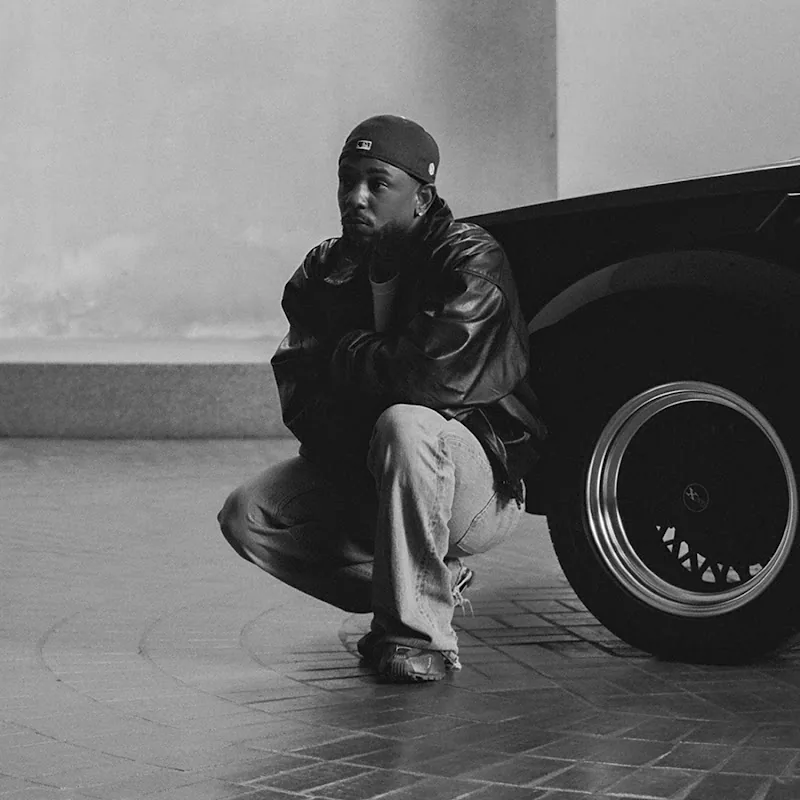
One of the most respected rappers alive, known for deep lyrics and Pulitzer-winning album DAMN.
The Kendrick Lamar Story
Kendrick Lamar Duckworth was born June 17, 1987, in Compton, California, and everything he has ever made traces back to that origin. He was eight years old the night Dr. Dre and Tupac filmed the “California Love” video outside his apartment complex, and he watched the whole thing from the sideline — the cameras, the spectacle, the way his entire neighborhood suddenly looked like the center of the world. Compton raised him on its sounds and its scars: drive-bys, house parties, corner-store sermons. Before he was the most decorated rapper of his generation, he was just a short, quiet kid with a notebook, listening harder than anyone else.
He started rapping under the name K.Dot as a teenager and put out his first mixtape at sixteen. Anthony “Top Dawg” Tiffith, the founder of Top Dawg Entertainment, saw him freestyle in a studio parking lot and signed him — a handshake deal that became one of the most important partnerships in rap history. The mixtapes Training Day and C4 built local heat; Overly Dedicated (2010) and Section.80 (2011) announced something bigger. Section.80 — released with no major-label machine behind it — moved 5,000 copies in its first week on word of mouth alone, and the industry suddenly had a new name on its lips. Dr. Dre put him on “The Recipe” with a guest spot on Detox-era sessions, and the anointing was official.
good kid, m.A.A.d city arrived in October 2012, and it was nothing less than a masterpiece delivered as a debut. Kendrick called it “a short film by Kendrick Lamar,” and that is exactly what it plays like: a coming-of-age story set over one long Compton day, with skits that bleed into songs, characters that return, and a moral arc as carefully drawn as any novel. “Swimming Pools (Drank),” “Poetic Justice,” and “Bitch, Don’t Kill My Vibe” were radio hits, but the album’s real power is in its writing — the most vivid storytelling a major-label rap debut had produced in years. It earned him four Grammy nominations and seven platinum plaques. He was twenty-five.
If good kid was the debut of a storyteller, To Pimp a Butterfly (2015) was the arrival of an artist without limits. Over two weeks of recording shaped by jazz, funk, and spoken word — Flying Lotus, Thundercat, Terrace Martin, Kamasi Washington all in the room — Kendrick made an album about Black America, fame, depression, and survival that sounded like nothing else on the radio. “Alright” became an unofficial anthem of the Black Lives Matter movement, its chorus chanted in streets from Ferguson to Baltimore, and it won him Best Rap Song and Best Rap Performance at the Grammys. The album itself won Best Rap Album and was nominated for Album of the Year. Critics called it the most important rap album of the decade. Barack Obama called it his favorite album of the year.
Then came DAMN. (2017) — leaner, meaner, and even more dominant. “HUMBLE.” was a blockbuster single; “LOYALTY.” with Rihanna and “LOVE.” with Zacari dominated the charts; the album spent three weeks at number one. And in April 2018, something happened that had never happened before: DAMN. won the Pulitzer Prize for Music. Kendrick became the first non-classical, non-jazz musician ever to receive the award — the Pulitzer board praised the album as “a virtuosic song collection unified by its vernacular authenticity.” The institution that had spent a century honoring symphonies and operas had just declared a Compton rap record a work of American literature.
The years after the Pulitzer were quieter by design. Kendrick curated and co-wrote the Black Panther soundtrack (2018), a chart-topping, Oscar-nominated project built around “All the Stars” with SZA. He and his longtime creative partner Dave Free launched pgLang, their multidisciplinary creative company, and in 2020 he announced he was leaving Top Dawg Entertainment after more than a decade. Mr. Morale & the Big Steppers (2022) — his final TDE album — was a dense, uncomfortable, therapy-session double album about fatherhood, faith, and generational trauma. It debuted at number one anyway and won Best Rap Album at the Grammys, his third in the category.
Then 2024 happened. What began as a subliminal-diss exchange with Drake — a rivalry simmering for over a decade — detonated into the most consequential rap battle since the nineties. Kendrick’s verse on Future and Metro Boomin’s “Like That” in March lit the fuse. By May he had released a run of records — “Euphoria,” “Meet the Grahams,” “Not Like Us” — that functioned as both diss tracks and cultural coronation. “Not Like Us,” produced by Mustard, became the song of the summer, blasted from car stereos in every city in America, and at the 2025 Grammys it swept all five of its nominations, including Record of the Year and Song of the Year. In February 2025, Kendrick headlined the Super Bowl LIX halftime show in New Orleans — the first solo hip-hop artist ever to headline the game — and brought SZA out for a medley that drew an estimated 133 million viewers. He released GNX that same November, and the Grand National Tour with SZA in 2025 became one of the highest-grossing co-headline tours of all time.
What makes Kendrick Lamar matter isn’t the trophies, though the trophies are historic. It’s the completeness of the vision: the concept-album architecture, the moral seriousness, the technical virtuosity, and the rare ability to move the entire culture with a single verse. He treats rap as literature and literature as a public trust — every album a chapter, every verse a sentence worth parsing. Married to his high-school sweetheart Whitney Alford since 2015 and a father of two, he has kept his private life nearly invisible in an era when visibility is the currency. The pen is the public self. And from Compton to the Pulitzer, from the parking lot to the Super Bowl, Kendrick Lamar’s career is hip-hop’s highest achievement: the bars, the vision, and the crown — undisputed, and still ascending.
Signature video
“Not Like Us” — Kendrick Lamar’s 2024 anthem, produced by Mustard, via YouTube.
Platforms + audience
Every count stamped with its source and date — real numbers only.
Follow Kendrick Lamar
Official links — we send you to Kendrick Lamar, we don't pretend to host it.
More on Previously
Where else Kendrick Lamar turns up on Previously — and where their corner of the site continues.
More like Kendrick Lamar
Same lane — Music creators from the hub.