
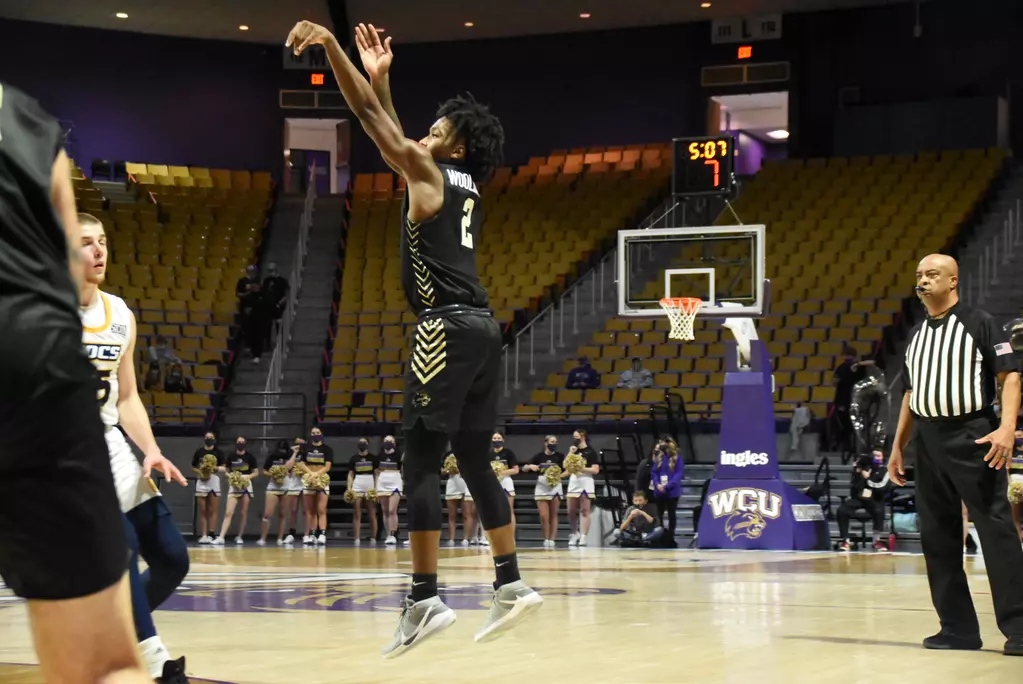
The longest winning streak in Southern Conference play in 15 years. A freshman dropping 23 on rival Furman. A third-team All-SoCon guard leading a team that finished fourth in the league in scoring. The 2025–26 Western Carolina Catamounts didn’t just improve on an 8–22 debut season for Tim Craft — they announced that the rebuild in Cullowhee is ahead of schedule.
Craft’s path to the Ramsey Center ran through 11 seasons at Gardner-Webb, where he went 188–166 and built the Runnin’ Bulldogs into a Big South factor. When Justin Gray — who had just delivered back-to-back winning seasons in Cullowhee for the first time in 13 years, including 22–10 in 2023–24 — left for Coastal Carolina in the spring of 2024, Western Carolina didn’t waste time: it hired the proven program-builder from down the road, betting Craft’s methodical style would translate to the SoCon.
Year one was the teardown: 8–22, 4–14 in the league, ninth place. Year two was the leap: 15–16 overall, 10–8 in the SoCon, tied for fifth — and the way it happened mattered more than the record. The Catamounts closed the regular season on a six-game winning streak, the program’s longest SoCon run since the 2010–11 season, capped by an 86–67 demolition of rival Furman on Ingles Court at the Ramsey Center.
The numbers tell the story of a team that found its identity: 78.5 points per game, fourth in the SoCon; 38.9 rebounds per game with a plus-6.5 margin; and the league lead in offensive rebounds at 13.45 per game. When Western Carolina scored 80, it went 11–2. This was a team that imposed itself physically — and in a league of skill and shooting, that physicality became the Catamounts’ edge.
Cord Stansberry was the headliner: the redshirt junior guard averaged 15.7 points in SoCon play, earned third-team All-SoCon honors, and poured in five 20-point games. Around him, a deep, balanced attack — redshirt junior Marcus Kell at 13.5 points per game in league play, graduate transfer Julien Soumaoro at 12.4 before injury, graduate transfer Tidjiane Dioumassi at 10.7 with six straight double-figure games to close the year, and freshman Tahlan Pettway, who announced himself with that 23-point outburst against Furman, hitting four threes.
The motor was freshman Samuel Dada, who led the team at 7.41 rebounds per game — fifth in the SoCon — and owned the offensive glass: 86 offensive boards, second in the league, 3.44 per game in conference play. In a program built on toughness, Dada was the embodiment — a freshman who played like a senior on the glass.
There’s history in these mountains. Western Carolina basketball’s place in the sport’s lore is permanent: on November 29, 1980, in Reid Gymnasium, Ronnie Carr hit the first three-point shot in NCAA history against Middle Tennessee State. The ball sits in the Basketball Hall of Fame. Every three-pointer in college basketball — every logo shot, every March buzzer-beater — traces back to Cullowhee.
The modern program has been a grinder in the Southern Conference, the league of Davidson’s ghosts and modern powers like Furman, Chattanooga, and East Tennessee State. The 2025–26 season put Western Carolina back in the middle of that fight: 10–8, competitive every night, and a SoCon quarterfinal date with Mercer in Asheville that showed how far the program had come in twelve months.
The 2026–27 outlook is genuine optimism. Craft’s teams historically compound — the system players are now veterans, the recruiting base in the Carolinas is deep, and the Ramsey Center is becoming a hard place to play again. The Catamounts don’t need another leap like last year’s; they need the next step: a winning season, a SoCon tournament run in Asheville, and a return to the postseason conversation. In Cullowhee, the streak that closed last season wasn’t an ending. It felt like a beginning.
The SoCon context matters: this is a league where the tournament in Asheville decides everything, and the 2025–26 race showed how tight the middle has become — East Tennessee State at 13–5, then Wofford, Samford, and Mercer all at 11–7, Western Carolina and Furman at 10–8. The Catamounts were two games out of second place. In a one-bid league, that’s the distance between a good season and a season that ends in March with a trophy.
Craft’s program-building history says the next step is coming. At Gardner-Webb, his teams improved steadily until they were perennial Big South contenders — 188 wins in 11 seasons don’t happen by accident. The Cullowhee version is following the same curve: tear down, build the culture, then win. Year three is when Craft’s teams historically start cashing in.
The Ramsey Center piece of this can’t be overstated. Ingles Court has become a genuine home-court advantage again — the student section packed, the mountains pressing in around the building, and a team that went 14–3 when leading at halftime feeding off it. Craft’s best Gardner-Webb teams defended their home floor ruthlessly, and the Cullowhee version is trending the same way: make the Ramsey Center a place nobody wants to visit in February, and the SoCon race takes care of itself.