
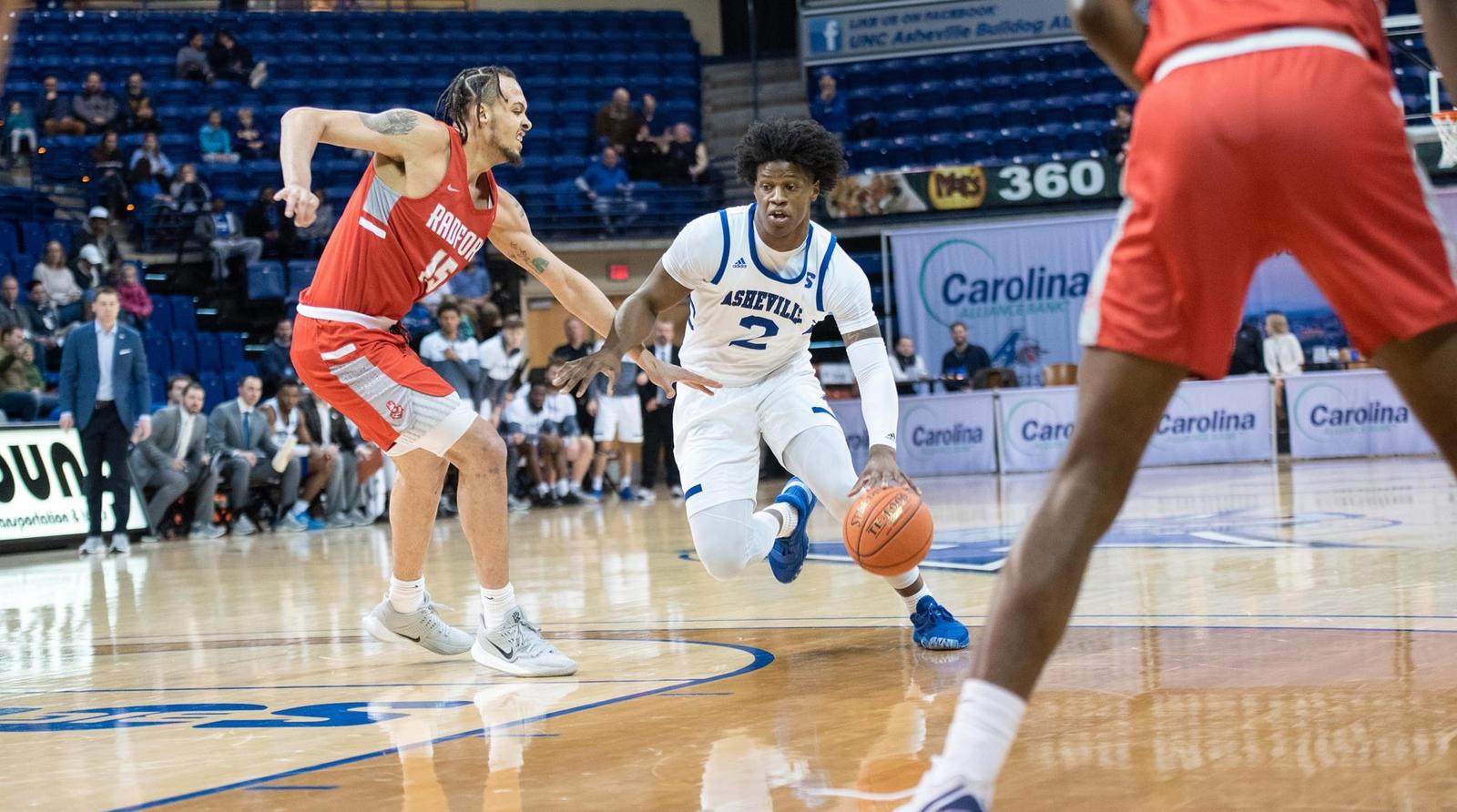
There is no more intimidating 3,200 seats in the mid-major world than Kimmel Arena when the Bulldogs are rolling. Over a three-year stretch ending in 2025, UNC Asheville went 38-3 at home — a .926 winning percentage, the third-highest home mark in the entire country. Big South opponents do not just lose in Asheville; they get swallowed by a blue-and-white wall of noise in the Blue Ridge Mountains. That fortress is the foundation of everything Mike Morrell has built.
Morrell was named the seventh head coach in program history in April 2018, inheriting a 4-27 team and a program at rock bottom. What followed is one of the great rebuilds in the Big South’s modern era. The Bulldogs won 15 games in year two, reached the CBI quarterfinals in 2022, and then detonated: 27-8 in 2022-23, 16-2 in the league, the Big South regular-season and tournament titles, and a trip to the NCAA tournament. Asheville followed with 22-12 and a conference championship-game appearance in 2024, then 21-11 in 2025 — a program-record 70 wins across three seasons. Morrell is now the active winningest coach in the Big South and the longest-tenured head coach in the league.
The program’s March history is deeper than the Morrell era. Asheville has danced five times: 2003, 2011, 2012, 2016 and 2023. The Bulldogs own two NCAA tournament wins — the 2003 play-in over Texas Southern in overtime and the 2011 First Four over Arkansas-Little Rock, also in overtime. The 2012 team, a No. 16 seed, took No. 1 Syracuse to the absolute wire, falling 65-72 in one of the great almost-upsets in tournament history. In 2016 and 2023 the Bulldogs drew No. 2 seeds Villanova and UCLA and lost, as 15-seeds are supposed to. The combined tournament record is 2-4 — but the 2012 Syracuse game is why mid-major America still talks about Asheville with reverence.
The 2025-26 season was a reset year by Morrell’s standards: 15-17 overall, 8-8 in the Big South, tied for fourth. But look closer and the machine was still humming. Asheville reached the Big South semifinals for the fourth consecutive year — one of just 22 programs in the nation to manage that feat. The Bulldogs produced five all-conference selections, tied for the second-most in a season under Morrell, and earned six Big South weekly honors. They led the league in multiple offensive categories while holding opponents to the lowest scoring average in the conference for the third straight season. Down year? Only by Asheville’s own elevated bar.
The faces of the program’s present: Toyaz Solomon, a preseason first-team All-Big South pick and one of the league’s most complete wings; Kameron Taylor, a second-team all-conference selection; and Myles Mayfield, who earned Big South weekly honors during the season. Morrell’s formula is consistent — score in the 70s every single night (seven straight seasons averaging 73-plus), defend with discipline, and let Kimmel Arena do the rest.
Asheville’s identity is mountain-town toughness wrapped in a modern, offensive program. This is not the grind-it-out Big South of old; Morrell’s Bulldogs play with pace and skill, and they recruit to a system that has produced the league’s best conference winning percentage (.712) over the last four years. The royal blue and white, the Bulldog mascot Rocky, the student section shaking the rafters — Kimmel is a genuine home-court weapon in an era when those are disappearing.
The 2026-27 campaign — Morrell’s ninth — is about reclamation. The Bulldogs have been to four straight conference semifinals; the next step is getting back to the championship game and the Dance. With 131 career wins, Morrell sits 13th all-time in Big South annals and joined the NABC Congress this year, the coaching fraternity’s recognition of a builder at the peak of his powers. High Point has risen as the league’s new money power; Asheville intends to remind everyone who built the modern Big South standard.
In a college basketball landscape that keeps consolidating power at the top, UNC Asheville is the case study for how a small school wins anyway: hire the right coach, build the fortress, defend your home floor like it owes you money, and stack March appearances until the nation learns your name. The Bulldogs have done it five times. They are planning on six.
The Bulldogs’ sustained success has also changed how the rest of the Big South prepares for them — Asheville no longer sneaks up on anyone, and every road trip to Kimmel comes circled on the calendar. Morrell has answered by reloading rather than rebuilding, developing under-the-radar talent into all-conference performers year after year. That player-development pipeline is the quiet engine of the whole operation: Asheville wins because its juniors and seniors are better than everyone else’s.