Oral Roberts basketball is starting over — again — and this time the reset comes with a name that should make the rest of the Summit League pay attention. Kory Barnett took over on March 28, 2025, after the school parted ways with Russell Springmann following two difficult seasons, and his first year in Tulsa was exactly what a total rebuild looks like: 10–23 overall, 4–12 in the Summit League, and a roster with 13 newcomers learning each other's names in November. It was ugly. It was also, by every account inside the Mabee Center, necessary.
Barnett didn't inherit a program. He inherited a blank slate and a glorious history. Only one player — Luke Gray — returned from the previous season's roster. Everyone else was new: transfers, freshmen, second-chance guys, all thrown together under a first-time head coach who spent his formative years as an assistant at West Virginia and played his college ball at Indiana. The Golden Eagles were picked ninth in the Summit League, opened the season at Oklahoma State — where former Cowboy Connor Dow, one of Barnett's 13 newcomers, swatted seven shots and briefly led the nation in blocks per game — and spent the winter taking the lumps that come with starting over. A 1–13 road record tells you everything about a young team learning how to win away from home.
Year two is where Barnett has to show the plan. The Summit League is unforgiving to rebuilds — South Dakota State and North Dakota State don't wait for anyone, and the league's 2025 coaching carousel (Springmann out at ORU, Eric Henderson leaving SDSU for Drake, Mark Turgeon taking over at Kansas City) means half the conference is retooling at once. That's actually an opening: in a league where everyone is new, the program that gels fastest wins. Barnett's pitch is system and culture — the West Virginia toughness he learned under the Mountaineers' staff, the Indiana fundamentals from his playing days — installed over a full offseason with a roster he chose. The days of 13 newcomers learning on the fly are supposed to be over.
The history he's chasing is the best mid-major story of the last decade. In 2021, Oral Roberts — a 15-seed — authored one of the great Cinderella runs in NCAA Tournament history: Max Abmas and Kevin Obanor shot the Golden Eagles past Ohio State in overtime and then past Florida, all the way to the Sweet 16, where they fell to Arkansas by two points. It was the program's first Sweet 16, and Abmas became a national folk hero — the tiny guard with unlimited range who couldn't miss. Two years later, Paul Mills's 2022–23 team went 30–5, swept the Summit League regular season and tournament, and took a 12-seed into March before running into Duke. Back-to-back acts like that don't happen by accident. They happen when a program knows exactly what it is.
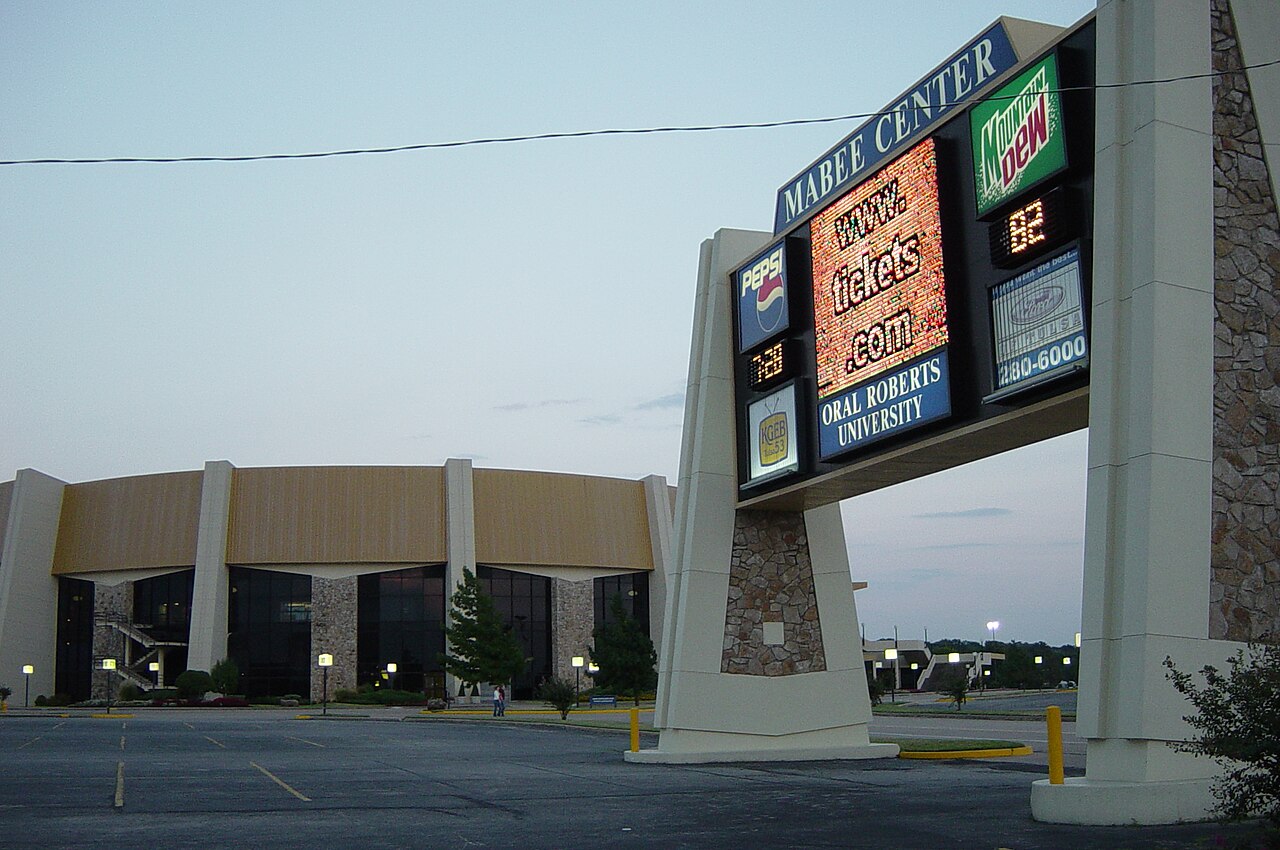
And ORU has always known. This is the school that gave Bill Self his first major head coaching job — Self coached the Golden Eagles from 1993 to 1997 before Tulsa, Illinois, and Kansas made him a Hall of Famer. Scott Sutton, son of Eddie, ran the program for 18 seasons (1999–2017) and kept it a Summit League fixture. The Mabee Center — 'Mabee Madness' at its peak — has been one of the great small-arena atmospheres in college basketball when the Golden Eagles are rolling. The retired numbers tell the story of the program's roots: No. 15 Anthony Roberts, No. 24 Rich Fuqua, No. 42 Mark Acres. The NBA pipeline runs through here too — Acres, Haywoode Workman (who later became an NBA referee), Larry Owens, DaQuan Jeffries, and more.
The fall from the 2023 peak was swift and total. Mills left for Wichita State after the 30-win season, Springmann's two years produced diminishing returns, and by March 2025 the program needed a fresh start badly enough to fire a coach after two seasons. That's how Barnett got the job — and how he got the blank slate. There's freedom in that: no inherited bad habits, no roster he didn't pick, no excuses about someone else's players. Year one was about survival and installation. Year two is about identity.
The Summit League math favors the bold. It's a one-bid league where the regular season is about seeding and March is about three wins in three days. ORU has cut those nets before — the program owns multiple Summit League tournament titles — and the institutional memory of 2021 and 2023 still lives in the Mabee Center. Players still come to Tulsa because of Abmas's run. Recruits still know the name. Barnett's job is to turn that memory into a present tense.
What defines Oral Roberts basketball is the gap between what this program has proven it can be and what it was last winter — and a first-time head coach who got the job precisely because he wasn't part of the decline. Ten wins and a ninth-place projection don't scare anyone. But the Golden Eagles have been here before: overlooked, underestimated, and then suddenly, in March, the most dangerous team in the building. Kory Barnett's second season is about making 'suddenly' happen on purpose.