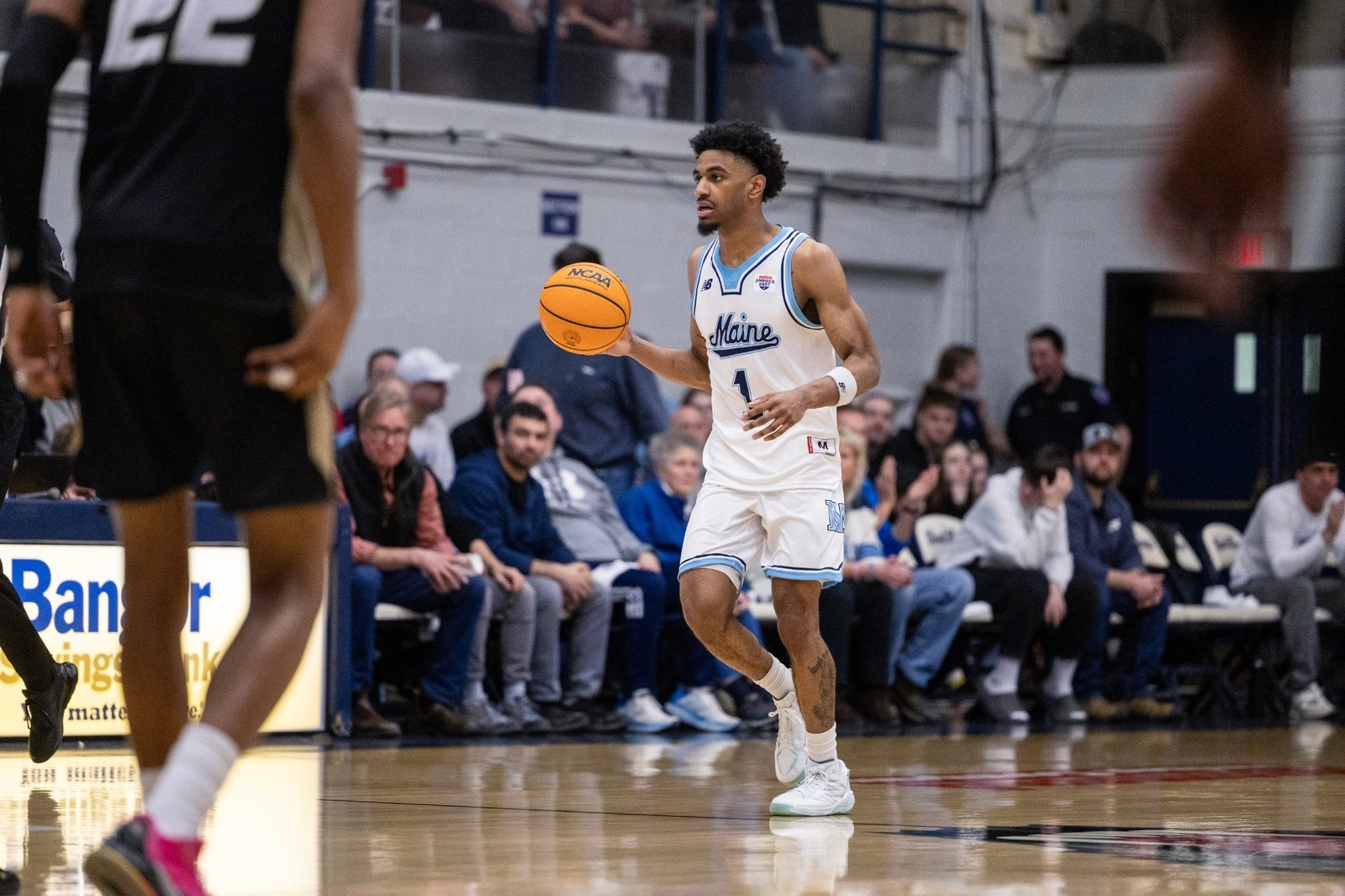
The Maine Black Bears are chasing the one thing that has eluded the program for its entire Division I existence: an NCAA Tournament bid. No current America East program carries that weight quite like Maine — the league’s northern outpost, the longest bus ride in the conference, and a program that has come close enough to taste it without ever breaking through. Head coach Chris Markwood enters his fifth season in 2026–27 with the rebuild’s hardest job still ahead: turning promise into March.
The 2025–26 season was a step back on the scoreboard. Maine finished 8–24 overall and 6–10 in America East play, bowing out in the conference tournament quarterfinals with a 60–58 heartbreaker to NJIT on March 7. The non-conference slate was brutal by design — long road trips against bigger programs, including a 0–10 start that tested everyone’s resolve — but there were flashes: a complete road win at Boston University in December, and a 104–66 demolition of Maine–Fort Kent that was the season’s highest scoring output. When league play began in January, the Black Bears found their footing against familiar foes, playing competitive basketball the rest of the way.
That step back stung because the two seasons before it had raised the bar. Markwood’s arrival in the summer of 2022 — he came from the Boston College staff — transformed Maine into a top-60 defensive program almost overnight. His first two teams won 28 games combined, the most in a two-year span since 2009–11, and the 2024–25 Black Bears got off to the program’s best conference start in more than 15 years, finished 16–12, clinched Maine’s first winning regular season since 2009–10, and hosted the program’s first-ever America East home playoff game. The national numbers told the story: top-25 in forced turnovers and steals, 32nd in fewest points allowed. Maine was winning with defense, discipline, and grit — the Black Bear way.
Getting back to that is the 2026–27 mission. Markwood’s system demands ball pressure, smart shot selection, and a roster that defends as five, and his staff — Rob O’Driscoll, Pete Gash, Jordon Bronner and Tommy Freeman — has recruited to that identity. The America East remains Vermont’s league until someone takes it, with UMBC surging to the top of the 2025–26 standings, but the conference’s middle is perpetually winnable, and the Black Bears have shown they can defend with anyone in it.
Home is Memorial Gymnasium — “The Pit” — the old-school, 5,800-seat barn in Orono where Maine basketball has been played for generations. It’s intimate, loud, and unapologetically vintage, the kind of building where the crowd sits on top of the court and the Black Bear faithful make every possession feel personal. Opposing coaches know the trip to Orono is the longest in the league and the atmosphere is the most distinctive; when Maine is good, The Pit is a genuine fortress.
The program’s history has real texture. Skip Chappelle coached the Black Bears for 17 seasons (1971–88), winning 217 games. John Giannini (1997–2004) rebuilt the program before leaving for La Salle. The record books belong to Rufus Harris — the 1979–80 America East Player of the Year, the program’s all-time leading scorer with 2,206 points, owner of the single-season scoring mark (718 points, 25.6 per game) that has stood for nearly half a century. Gerald McLemore buried 323 career threes; John Rupert set 17 single-season shooting records; Marty Higgins and Justin Rowe anchor the assists and blocks ledgers.
And then there’s the NBA lineage. Rick Carlisle played at Maine before transferring to Virginia — and went on to an NBA playing career and a championship as a head coach with the Dallas Mavericks. Jeff Cross played in the league too. For a program in the Maine woods, that’s a proud line to the highest level of the sport.
The rivalry with New Hampshire is one of college basketball’s great hidden gems: Maine–UNH is the longest continuous rivalry between two non-Ivy League schools, stretching 116 seasons and counting as of 2020. The Border Battle, played in hockey and hoops alike, is the heartbeat of the New England college calendar — two flagship state universities, two fanbases that genuinely dislike each other, and a history neither side will ever let go.
What defines Maine is the unfinished business. Every America East program has its March story except this one, and the Black Bears know it. The 2026–27 season isn’t about moral victories or defensive rankings — it’s about getting back to the winning side of .500, earning a home game in the conference tournament, and taking the next step toward the bid that would change everything in Orono. Markwood has already proven he can build a top-60 defense at Maine. Now comes the harder part: the breakthrough.
The Pit will be waiting. The bus trips will still be long. And somewhere in March, the Black Bears will get their three games — because in a one-bid league, that’s all anyone ever needs.