There are two banners that watch over Georgia Tech basketball, and neither will ever come down. The first is from 1990: "Lethal Weapon 3" — Kenny Anderson, Dennis Scott and Brian Oliver — the trio that carried the Yellow Jackets to the Final Four and announced the program to America. The second is from 2004: Paul Hewitt's team, Jarrett Jack and Will Bynum leading a fearless tournament run all the way to the national championship game, where UConn ended the dream. Between them lies the Bobby Cremins era (1981-2000), the golden age when the Jackets won the 1985 ACC title with Mark Price and John Salley and became a genuine national power. That is the Georgia Tech that matters — the program with the pedigree, the banners, and the right to expect more.
The recent years have not measured up. In March 2026, Georgia Tech fired Damon Stoudamire after an 11-20 season (2-16 in the ACC) that ended in last place on a 12-game losing streak. Stoudamire finished 42-55 over three seasons without ever producing a winning record — the closest being 17-17 in 2024-25 with an NIT bid. The school owed roughly $2.6 million in buyout money, paid over two years. Greg Gary, the former Mercer head coach, was named interim as the search began. For a program that played for a national title in 2004, sitting at the bottom of the ACC was an unacceptable kind of history.
The answer, announced March 21, 2026 and introduced two days later at McCamish Pavilion, is Scott Cross — the 16th head coach in program history. If you followed the Sun Belt over the last decade, the name needs no introduction. Cross spent 2019-26 at Troy, winning back-to-back Sun Belt regular-season titles and taking the Trojans to back-to-back NCAA tournaments — the kind of sustained mid-major excellence that made him the most coveted coach in the portal-era coaching carousel. Before Troy, he coached UT Arlington from 2006-18, winning a Sun Belt title there and taking the Mavericks to an NCAA tournament and two NITs; between those stops, he spent 2018-19 as an assistant under Jamie Dixon at TCU. As a player, Cross was a standout at UTA (1995-98), where he was an Academic All-American — a Garland, Texas native who graduated with a 4.0 GPA in marketing. Career record: 350-260, a .574 winning percentage built the hard way, at places where winning is hard.
Cross inherits a program with new leadership at the top and serious money behind it. Athletic director Ryan Alpert was hired in July 2025 from Tennessee, where he ran championship-level operations, and he's steering the $500 million "Full Steam Ahead" fundraising initiative — the largest in Georgia Tech athletics history. The message is unambiguous: Tech is done being an afterthought in the ACC. The investment, the hire, the urgency — all of it says a sleeping giant is trying to wake up.
The roster Cross kept is genuinely promising. The headline name is Moustapha Diop, the 6-foot-11 power forward retained from the 2026 class who projects as a cornerstone in the paint. Around him, combo guard Kaiden Bailey gives the backcourt a scoring threat with real upside, and the staff landed No. 78 recruit Kayden Allen — a 6-foot-6 guard from the national rankings who chose the Jackets even through the coaching change. The 2026 class is ranked No. 30 nationally, a foundation Cross can build on instead of burning down. When Cross held his first preseason press conference on October 2, 2026 — fresh off a "secret scrimmage" against Oklahoma and with an exhibition against Maryland looming — the talk was about pace, toughness, and a team that doesn't yet know how good it can be. That's coach-speak, but with Cross, it's coach-speak backed by a track record.
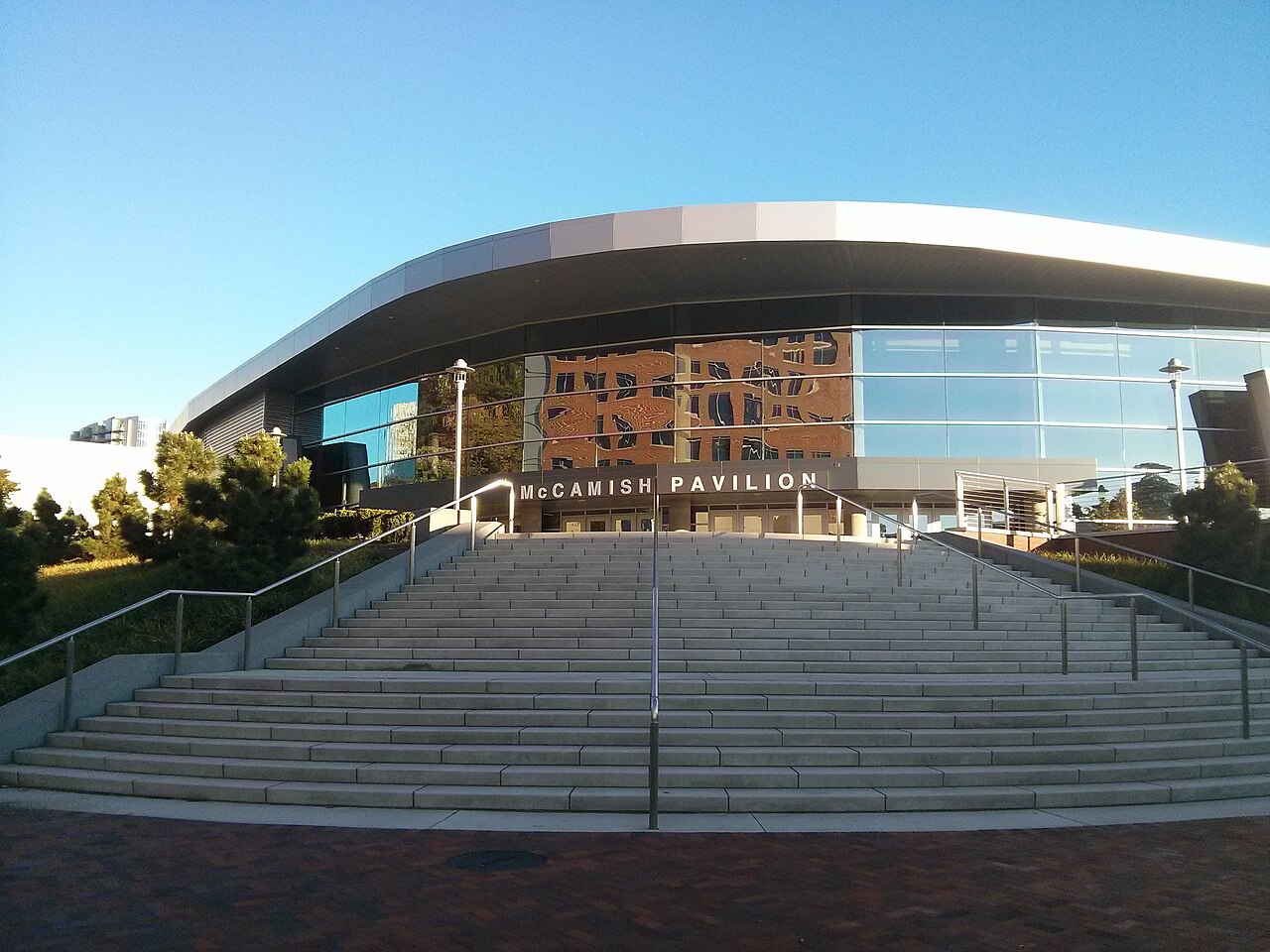
The home court remains one of the ACC's best-kept secrets. Hank McCamish Pavilion, the 8,600-seat arena in Midtown Atlanta, is intimate by design — the kind of building that gets deafening when the team is rolling. The old Alexander Memorial Coliseum, the "Thrillerdome," gave way to this gleaming modern home, but the DNA is the same: a tough trip for visitors when the Jackets are good. The task now is to be good again — to fill those seats with a team worth watching.
The ACC wars are the nightly grind: Duke, North Carolina, the league's giants, the conference that has defined and sometimes devoured Georgia Tech for decades. But the league is also the opportunity — nothing rebuilds a program's profile like winning in the ACC, and Cross has never coached in a power conference before. The 2026-27 season is his apprenticeship and his audition at once.
What defines Georgia Tech has never changed. It's 1990 — Anderson, Scott, Oliver, the Final Four, the Cremins sideline theatrics that made the program electric. It's 2004 — Hewitt's Jack and Bynum, the title-game run, the modern peak. It's the NBA pipeline that runs from Mark Price through Kenny Anderson to the modern pros, and the Midtown Atlanta campus that gives the program a recruiting base no mid-major can touch. The Yellow Jackets have the history, the arena, the money and now a proven winner on the bench. The banners are waiting for company.