

The Short Version
- Tencent is considering raising up to $5 billion through an offshore bond sale, Bloomberg News reported Thursday, as the company ramps up spending on AI and computing infrastructure.
- The notes could be denominated in US dollars and offshore yuan, with the sale potentially landing as early as this month, according to people familiar with the matter.
- It would follow Tencent's $4.66 billion June offering — its largest debt deal since 2020 — and comes as global AI-related debt issuance has topped $575 billion in 2026, per Goldman Sachs.
- Tencent did not immediately respond to a Reuters request for comment. SoftBank raised ~$11.1 billion in a junk-bond offering last month for its own AI plans.
SHENZHEN
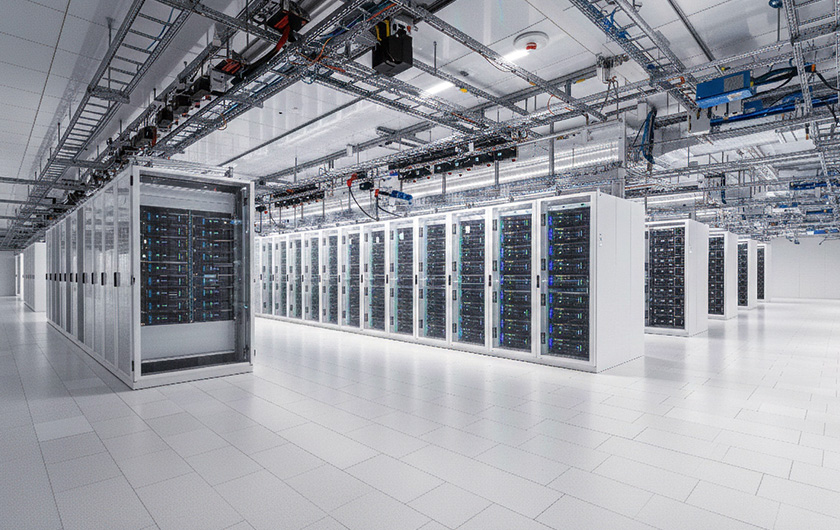
The AI arms race has a new funding round, and this time the money is borrowed. Tencent is weighing an offshore bond sale of up to $5 billion, Bloomberg News reported Thursday, as China's most valuable company scrambles to bankroll the computing infrastructure its AI ambitions require. The notes could be issued in dollars and offshore yuan, and the deal could come as early as this month, people familiar with the matter told Bloomberg.
This is not a company dipping a toe in the debt markets. It's a cannonball. Tencent raised $4.66 billion in June in its largest bond offering since 2020, with the proceeds earmarked for general corporate purposes including AI development. Four months later, it's back for more — because the thing about AI infrastructure is that the spending never stops. The chips get bought, the data centers get built, and then the next model needs bigger everything.
The backdrop here is worth understanding, because Tencent is far from alone. Bloomberg's reporting notes that global tech companies are tapping debt markets at a historic pace to finance AI buildouts, despite growing investor unease about the sector. Goldman Sachs credit strategists put a number on it: global AI-related debt issuance has already topped $575 billion in 2026. Read that again. More than half a trillion dollars of borrowed money, raised in a single year, on the bet that AI infrastructure pays for itself before the bill comes due.
The most dramatic data point in the wave came just last month, when SoftBank Group raised the equivalent of about $11.1 billion through one of the largest corporate junk-bond offerings on record, explicitly to fund its AI plans. SoftBank's deal was watched as a litmus test for how debt investors feel about AI financing — whether the market still has appetite for enormous, speculative, AI-linked paper. The answer, apparently, was yes. Tencent seems to have read the same signal.
What's driving the urgency at Tencent specifically is competitive pressure at home. Bloomberg has reported that the company plans to at least double its AI investments to more than 36 billion yuan — roughly $5.2 billion — in 2026, and that it is racing to catch up with Alibaba and ByteDance in both user adoption and large language model development. Tencent has the users — WeChat is practically a country — but in the model race it has been playing from behind. Borrowing $5 billion is what catching up costs.
It's also worth noting the market's mood around all of this. Bloomberg reported that Tencent's shares plunged after the company signaled it would curtail buybacks to fund its AI push and failed to deliver a convincing vision of how it profits from agentic AI. That's the tension at the heart of this entire debt wave: investors love the AI story, they're just starting to ask pointed questions about the returns. Every new bond offering is a bet that the questions can wait.

The mechanics of the potential deal are familiar from the June offering: offshore notes, a mix of dollar and offshore yuan tranches, marketed to international investors. The June deal's proceeds went mainly to debt refinancing and general corporate purposes, including developing AI products and services, per Bloomberg — and the new sale's use of proceeds will likely rhyme. When you're doubling AI capex, everything is AI capex.
For context on how fast this is escalating: Tencent's June offering — nearly $4.7 billion in long-dated dollar and yuan securities — was already its biggest debt deal since 2020, and the proceeds went mainly to debt refinancing and general corporate purposes, including developing AI products and services, according to Bloomberg. Four months later the company is back at the window for a similar amount. Annualized, that's roughly $10 billion of new borrowing in a single year from a company that historically tapped the debt markets far more sparingly.
And the market keeps rewarding the strategy — for now. SoftBank's $11.1 billion junk-bond deal last month was treated as the litmus test for AI-linked debt appetite, and it cleared without drama. Goldman Sachs' tally of $575 billion in AI-related debt issuance this year says the window is wide open. The risk, the one the sector-stability worriers keep naming, is that this debt is being issued against revenues that don't exist yet. Tencent's bet is that by the time the bill comes due, the AI products will be paying for the infrastructure that built them.
One caveat, stated plainly: this is still in the consideration stage. Bloomberg's sources asked not to be identified because the discussions are private, and Tencent did not immediately respond to a Reuters request for comment. Deals at this stage can shrink, slip, or evaporate. But the direction of travel is unmistakable — and it's the same direction as Samsung's record quarter on the AI memory boom and the AI chip stock rally we covered earlier: the entire industry is converting borrowed money and record profits into compute, as fast as it can.
The question nobody in the bond market wants to ask too loudly is the obvious one: what happens if the AI returns don't arrive on schedule? $575 billion of debt doesn't disappear if the models underdeliver. But that's a 2027 problem, or a 2028 problem. Right now, in October 2026, the trade is still working, the investors are still buying, and Tencent is still borrowing. Watch for the pricing — if this deal lands tight, the AI debt party keeps going. If it struggles, the music might finally be stopping.
Tencent is ramping AI and computing-infrastructure spending; Bloomberg reports it plans to at least double AI investment to over 36 billion yuan (~$5.2B) in 2026, chasing Alibaba and ByteDance.
Sources · 3 sources
- Reuters — Oct 8, 2026 — Tencent mulls $5 billion bond sale to push AI ambitions, Bloomberg News reports
- Moneyweb / Bloomberg — Oct 8, 2026 — Tencent mulls $5bn bond offering as AI push ramps up
- Bloomberg Law — Tencent's shares dive after agentic AI vision fails to impress