
The Short Version
- U.S. District Judge Jennifer Dorsey granted summary judgment to Clark County on Sept. 25, upholding the county's 2024 pedestrian flow zone ordinance (CCC 16.13.030) that bans stopping or standing on Las Vegas Strip pedestrian bridges.
- The ordinance makes it a misdemeanor — punishable by up to a $1,000 fine and/or up to six months in jail — to stop, stand, or engage in activity intending to cause someone else to stop or stand inside a Pedestrian Flow Zone. The only exception is pausing while waiting to use an elevator or escalator.
- The ACLU of Nevada sued in February 2024 on behalf of wheelchair user Lisa McAllister and violinist street performer Brandon Summers, arguing the rule was vague and overbroad and infringed First Amendment activity. Dorsey ruled the ordinance is content-neutral, doesn't substantially burden speech, and goes no further than necessary.
- Critics have dubbed it the "Strip Selfie Ban" — and for visitors, the practical rule is simple: keep moving on the bridges, take your photos on the sidewalks.
LAS VEGAS
The next time you walk the Strip and stop on a pedestrian bridge to frame the perfect photo, remember: you're standing inside a Pedestrian Flow Zone. Clark County says don't stand there. And as of Sept. 25, a federal judge agrees that's perfectly constitutional.
U.S. District Judge Jennifer Dorsey granted summary judgment to Clark County, rejecting the ACLU of Nevada's challenge to the pedestrian flow zone ordinance the county commissioners approved unanimously on Jan. 2, 2024. The rule makes it unlawful to stop or stand within designated zones on the Strip's pedestrian bridges — or to do anything with the intent of causing someone else to stop or stand. Violation is a misdemeanor: up to $1,000, up to six months in jail, or both.
The ruling closed out a lawsuit the ACLU filed in February 2024, not long after the ordinance took effect. The plaintiffs were Lisa McAllister, a manual wheelchair user, and Brandon Summers, a violinist who performs on the Strip — two very different sidewalk lives, joined in one argument: the rule is too vague, too broad, and it tramples First Amendment rights on one of the most photographed sidewalks on Earth.
What the ordinance actually bans
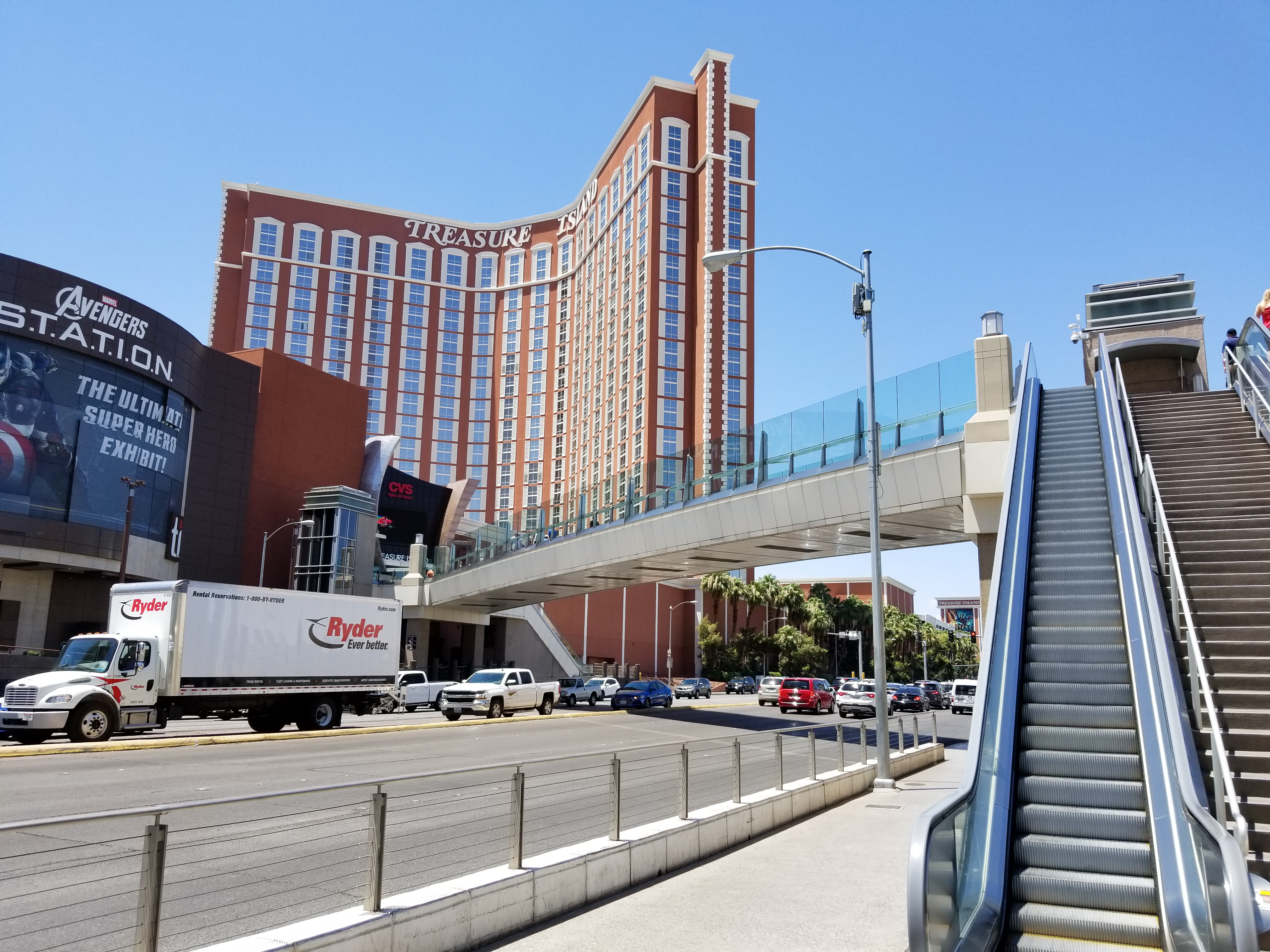
The ordinance, codified as CCC 16.13.030, draws Pedestrian Flow Zones around the pedestrian bridges that carry millions of visitors over Las Vegas Boulevard each year. The zones cover the bridges themselves and extend up to 20 feet around the touchdown structures — the escalators, elevators, and stairs where foot traffic is heaviest.
Inside a zone, the rule is blunt: it is unlawful to stop, stand, or engage in any activity intending to cause another person to stop or stand. There is exactly one exception — a pedestrian may stop while waiting to use an elevator or escalator. Everything else, from selfie poses to a busker's crowd-gathering pitch, is fair game for a misdemeanor citation.
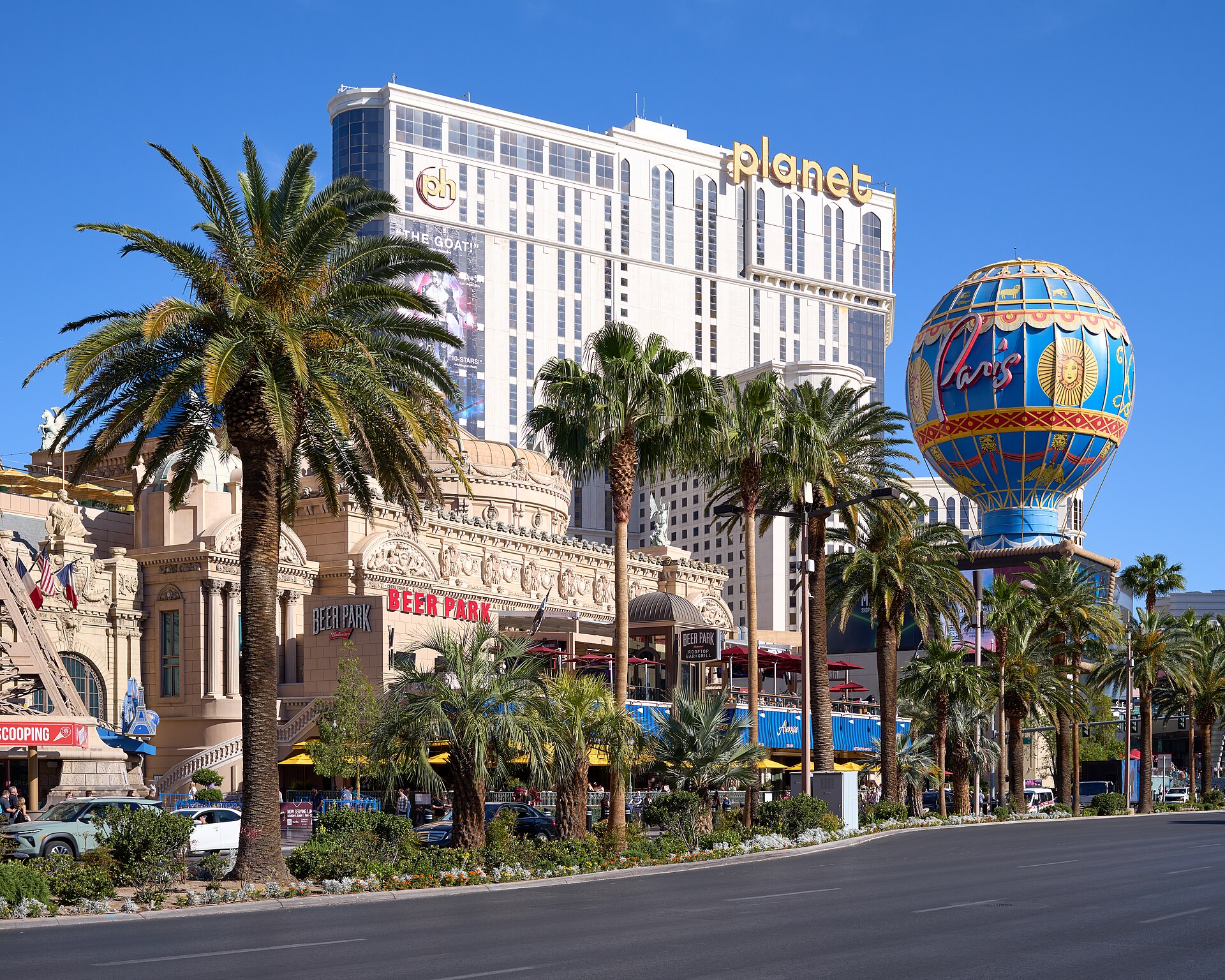
That is what makes the ordinance so sweeping for a place like the Strip, where stopping is practically a cultural ritual. The bridges exist precisely because tens of thousands of people need to cross Las Vegas Boulevard safely at the busiest intersections — and many of those people have, historically, stopped mid-crossing to take in the view, photograph the lights, or watch the street below.
The county's case: crowds that can't be predicted
Clark County has always framed the ordinance as a preventative safety measure, not a punishment for tourists. The commissioners pointed to a decade of pedestrian traffic studies showing how foot traffic stacks up at bridge touchdown points — the exact spots where a stopped crowd can suddenly become a crush.
The county's math emphasizes proportionality: the bridges make up only about 5.7 to 6 percent of the corridor's total sidewalk system. In the county's telling, the ordinance leaves more than 94 percent of Strip sidewalks completely open for stopping, standing, performing, and photographing — it just keeps the narrowest, busiest pinch points flowing.
Judge Dorsey picked up that thread in her ruling, noting the unpredictability that defines the Strip. "It is difficult to predict when large crowds may be on the pedestrian bridges — particularly in light of the numerous large concerts, sports events, and conferences held on the Strip on any given day," she wrote, according to CDC Gaming's coverage of the decision. On the Strip, a normal Saturday can turn into a surge event without warning — which is exactly when a bridge full of stationary spectators becomes a safety problem.
The challenge: "the sidewalks belong to all of us"
The ACLU of Nevada came at the ordinance from the opposite direction: public sidewalks are public forums, and the Strip's sidewalks are the most expressive kind of public forum there is. The group's complaint, filed as Case 2:24-cv-00334, argued the county's evidence didn't support its public safety claims — and that what the county really wanted was control of the bridges.
The two named plaintiffs embodied the stakes. McAllister, who uses a manual wheelchair, raised the question of how a stop-and-stand ban treats people whose mobility doesn't fit a keep-moving rule. Summers, a violinist who performs on the Strip, raised the speech question: if a crowd gathers to listen, has he committed a misdemeanor?
ACLU attorney Christopher Peterson made the group's position plain. "Las Vegas Boulevard belongs to all of us," he told a local outlet, adding that the sidewalks were paid for by taxpayers — "so, at the end of the day, your constitutional rights are still there." The ACLU's position was that rights don't get suspended just because a crowd might form.
What the judge decided
Dorsey's answer was that rights don't get suspended — but they can be regulated. She found the ordinance content-neutral: it restricts stopping and standing regardless of what anyone is saying, performing, or photographing. She found it does not substantially burden speech, and that it goes no further than necessary to serve the county's interest in keeping pedestrian traffic moving through the corridor's tightest choke points.
The judge also acknowledged the ordinance wasn't the narrowest possible version — she noted the county could have written a more tailored rule — but concluded the law as written survives constitutional scrutiny. That matters for what comes next: the ruling means the ordinance stands as written, and Clark County doesn't have to go back to the drawing board. For the ACLU's clients, the defeat is on the merits — the case is over at the district court unless the group decides to appeal to the Ninth Circuit.
What it means for your next Strip walk
For visitors and locals alike, the practical takeaway hasn't changed since 2024 — it's just harder to argue with now. Keep moving on the bridges. If you need to stop, step to the sidewalks off the bridge or the touchdown plazas outside the 20-foot zones. The only lawful pause on a bridge is while you're waiting for the elevator or escalator.
Street performers, photographers, and anyone whose livelihood depends on a gathered crowd face the sharpest edge of the rule: drawing a crowd that stops on a bridge can itself be the violation. And the misdemeanor stakes are real — this isn't a jaywalking-style infraction, it's a criminal citation that carries a potential jail term.
Worth remembering: the Strip has been the site of real crowd tragedies and near-misses over the years, including a Strip crowd disturbance that ended with 11 arrests. The county's argument was never really about selfies. It was about what happens when a bridge designed for flow becomes a platform for standing — and now a federal judge has said that argument is enough.
Sources · 4 sources
- CDC Gaming — ACLU loses challenge against 'selfie ban' on Las Vegas Strip pedestrian bridges
- The U.S. Sun — Americans and tourists face $1,000 fines under 'stop and stand ban' on Las Vegas Strip
- Las Vegas Newsroom — Judge upholds Clark County ban on stopping on Las Vegas Strip pedestrian bridges
- ACLU of Nevada — Case 2:24-cv-00334 complaint documents
More from the newsroom: this weekend's Las Vegas guide · F1 bridge prep around the Strip · Question 7's second vote on Nov. 3