
The UMass Minutemen spent the 1990s as must-see college basketball — John Calipari's relentless, pressing, trash-talking program that stormed to the 1996 Final Four behind Marcus Camby's brilliance, spent weeks ranked No. 1 in the country, and made the Mullins Center the loudest room in the Atlantic 10. And then they did something nobody expected in 2025: they walked out of the Atlantic 10 entirely and into a new life in the Mid-American Conference.
The 2025-26 season was year one of that new life, and it delivered the program's most delicious moment in a decade. Frank Martin's Minutemen finished 17-16 and 7-11 in MAC play — a modest eighth seed in the conference tournament — and then produced one of the stunners of Championship Week: an upset of previously unbeaten, 20th-ranked Miami (OH) in the MAC quarterfinals. The RedHawks arrived with a school-record 20-game winning streak and dreams of a perfect season; the Minutemen sent them home. UMass lost to Toledo the next day in the semifinal, but the damage to the bracket — and the statement about the program's new home — was done.
Martin, now entering his fifth season in Amherst in 2026-27, was hired to do exactly this kind of thing: bring an edge back to a program that has been wandering since Calipari left for the NBA thirty years ago. Martin took Kansas State to four NCAA Tournaments in five seasons and dragged South Carolina to the 2017 Final Four. His UMass teams play the way he always has — physical, nasty, turning opponents over, taking on his personality. The Minutemen forced turnovers in bunches last season and played with a chip, even when the defense leaked (nearly 79 points allowed per game) and the offense ground through inefficient stretches.
The heroes of the MAC debut were seniors Leonardo Bettiol and Marcus Banks Jr. Bettiol — the skilled forward who carried the offense at nearly 18 points a game in his final collegiate season — was the team's steadiest hand, a crafty scorer who could punish mismatches inside and out. Banks gave the Minutemen their electricity: a 31-point eruption against Ohio in the regular-season finale stopped a potential seven-game skid, and his 19-point night against Buffalo (with four threes) steadied the team ahead of the tournament run. Forward Daniel Hankins-Sanford brought the muscle on the glass, and the rotation ran deep with role players who bought into Martin's grind-it-out identity.
But here's the hard truth about 2026-27: Bettiol and Banks are gone, graduated out of a senior-heavy core. The Minutemen's next act depends on what Martin and his staff build from the portal and the returning young pieces — the same roster-building sprint every program in America is running now. The 2025-26 team proved UMass can compete in the MAC on any given night; the question is whether they can do it across 18 conference games and push toward the top of the standings instead of the middle.
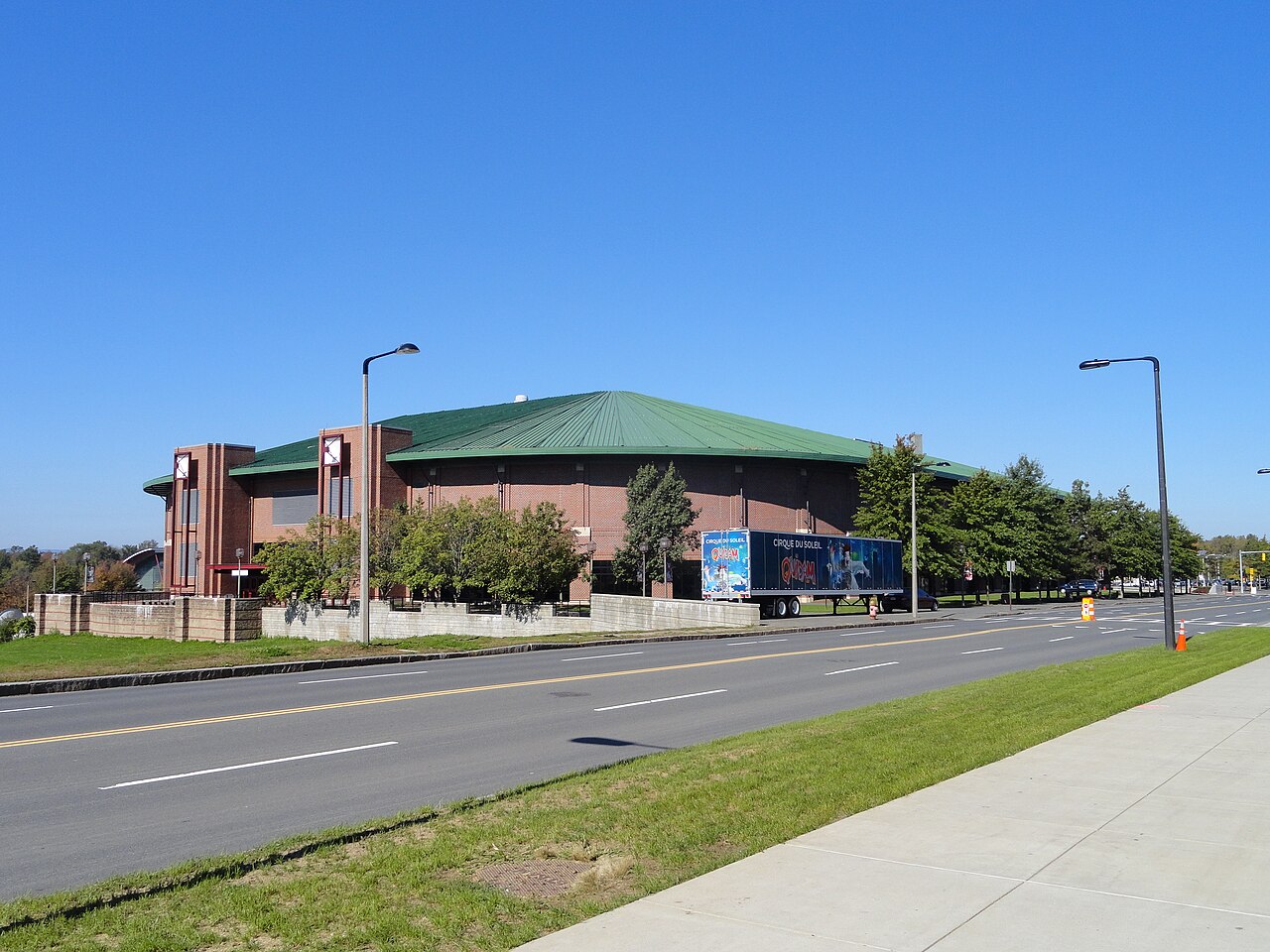
The history they're chasing is towering. The Calipari era (1988–96) remains the program's golden age: five straight NCAA Tournaments, the 1996 Final Four (later vacated by the NCAA in the Camby-agent scandal, though nobody in Amherst has forgotten how good that team actually was), and a national profile the program has never quite recaptured. The Mullins Center — 9,493 seats on the Amherst campus — still holds the echoes of those crowds.
Since then, the highlights have been scattered: Bruiser Flint kept the program respectable into the early 2000s, Derek Kellogg got the Minutemen back to the 2014 NCAA Tournament behind Chaz Williams's fearlessness, and UMass has now been to nine NCAA Tournaments total. But the wandering — through coaching changes, through the A-10's middle class — is what defined the last decade. That's why the MAC move matters so much: it's a reset, a chance to be a big fish in a proud mid-major league instead of a nostalgic name in a conference that moved on.
The geography helps. The MAC's footprint — Ohio, Michigan, western New York — puts UMass in bus-ride territory for road games and gives the program natural rivalries to build: Miami (OH), Ohio, Akron, Toledo, Kent State. The Minutemen's first season in the league produced a 7-11 record and a tie for seventh, but also the tournament upset that announced their arrival. In a one-bid league, that's the currency that counts: get hot in March, and nobody cares what seed you were.
What defines UMass right now is the tension between the past and the future. The '90s magic — Calipari's brilliance, Camby's dominance, the Final Four run — is the soul of the program, the standard every Minutemen team gets measured against. The MAC era is the bet that the program's next great chapter doesn't have to look like the last one. Frank Martin's fifth season is the test: can the Minutemen turn a tournament upset into a program, and turn a new conference into a home?