The Ball State Cardinals' basketball identity is forever tied to Bonzi Wells — the fearless scoring guard who became one of the MAC's all-time greats in the late 1990s before a long NBA career. Wells's Cardinals were must-see MAC basketball: tough, talented, and utterly unafraid.
The program's peak March moment came in 1990, when the Cardinals reached the Sweet 16 — knocking off Oregon State and star Gary Payton along the way before falling to eventual champion UNLV. For a MAC program, the Sweet 16 is hallowed ground, and the '90 team's run remains the standard in Muncie.
The late-'90s Wells era brought more tournament trips and the program's most sustained success: MAC titles, national attention, and a team that played with a swagger rare for the conference. Ball State proved a MAC school could recruit and develop NBA-caliber talent.
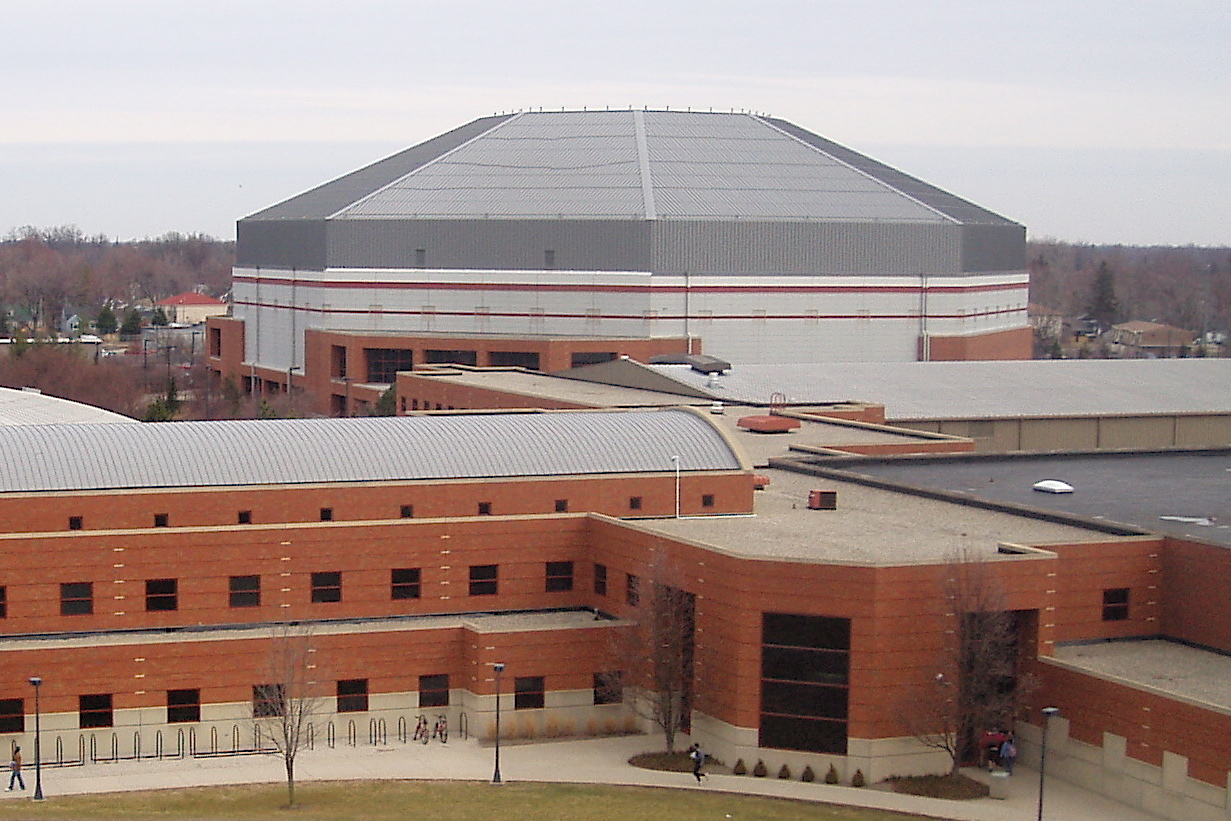
Worthen Arena is the Cardinals' home: a 11,000-seat venue in Muncie that has hosted the program's biggest nights. When Ball State is good, the building fills with the kind of mid-major passion that makes college basketball special.
The MAC wars define the season: the rivalries with Miami (Ohio), Central Michigan, and the rest of the conference's grinders, all fighting for the one bid that usually decides everything in Cleveland each March. The Cardinals' history in the MAC tournament is rich with heartbreak and triumph. The Cardinals' rivalry games with Miami and Central Michigan have decided more than their share of MAC races, and the Worthen Arena crowds treat those nights like playoff games.
What defines Ball State is the Wells standard: a MAC program that reached the Sweet 16 and produced a genuine NBA star. In Muncie, the Cardinals' best teams play with Bonzi's fearlessness — and the next March run is always the goal. The next Sweet 16 banner is the program's white whale — and in Muncie, nobody has stopped believing it's coming.
Muncie, Indiana, is basketball country — the kind of town where the sport is a birthright — and the Cardinals carry that weight with pride. The Worthen Arena crowds know their hoops, and when Ball State is rolling, the building has the old-school Midwestern intensity that made Indiana famous. The MAC tournament in Cleveland is the annual crucible: three wins in three days or the season ends, and the Cardinals' history there is written in both triumph and heartbreak. Bonzi Wells set the standard, the 1990 team set the ceiling, and every Ball State team since has chased both.
Now comes the reset. On March 7, 2026, Ball State fired Michael Lewis after four seasons — three straight losing campaigns, a 12-19 finish, and a ninth-place MAC standing that left the Cardinals out of the conference tournament for the third year running. The 61-64 record told the story: Lewis opened with a promising 20-12 debut, the program's first 20-win season in six years, and then watched the win total slide every single year after. Athletic director Jeff Mitchell didn't hesitate. "We are grateful to Coach Lewis for the passion and commitment he brought to our program," he said — and then went hunting for the next era.
He found it in Chris Capko. Hired March 19 from SMU, where he'd been Andy Enfield's associate head coach, Capko arrives with one of the sharpest recruiting résumés in the country: eight consecutive top-30 classes at USC, where he helped develop Evan Mobley, Onyeka Okongwu, Isaiah Collier — and Bronny James. Last season he helped assemble SMU's fourth-ranked recruiting class nationally and steered the Mustangs to their first NCAA Tournament bid since 2017. The 21st head coach in Ball State history walked into his introductory press conference with a question that has become the program's new mantra: "Why not Ball State? Why not us? Why not now?"
Capko's first roster is almost entirely his own. Only two players returned from the Lewis era — senior forward Mason Jones and senior guard Joey Hart, a former Kentucky transfer looking for a breakout year after two injury-riddled seasons — and Capko added 12 new faces, almost all of them upperclassmen. Twelve of the 14 players on the 2026-27 roster are juniors or older, including fifth-year guard Trey Lewis, an intentional build: experience now, culture immediately, no waiting for freshmen to grow up. On staff, Capko brought in Pershin Williams from Georgia Tech and made a public play to bring program legend Bonzi Wells back into the fold, a bridge between the glory years and whatever comes next.
The MAC is as winnable as it's been in years, and the bar for success in year one is refreshingly concrete: finish top eight and get to Cleveland. The Cardinals haven't qualified for the conference tournament in three straight seasons — the league only takes eight — so simply playing meaningful March basketball in Muncie would count as progress. But Capko didn't leave a top-five national recruiting operation to aim at eighth place. Worthen Arena has been too quiet for too long, and the last MAC title — Ray McCallum's 2000 team — is now a quarter-century in the rearview. "Why not now?" is a question; the 2026-27 season is the answer.